

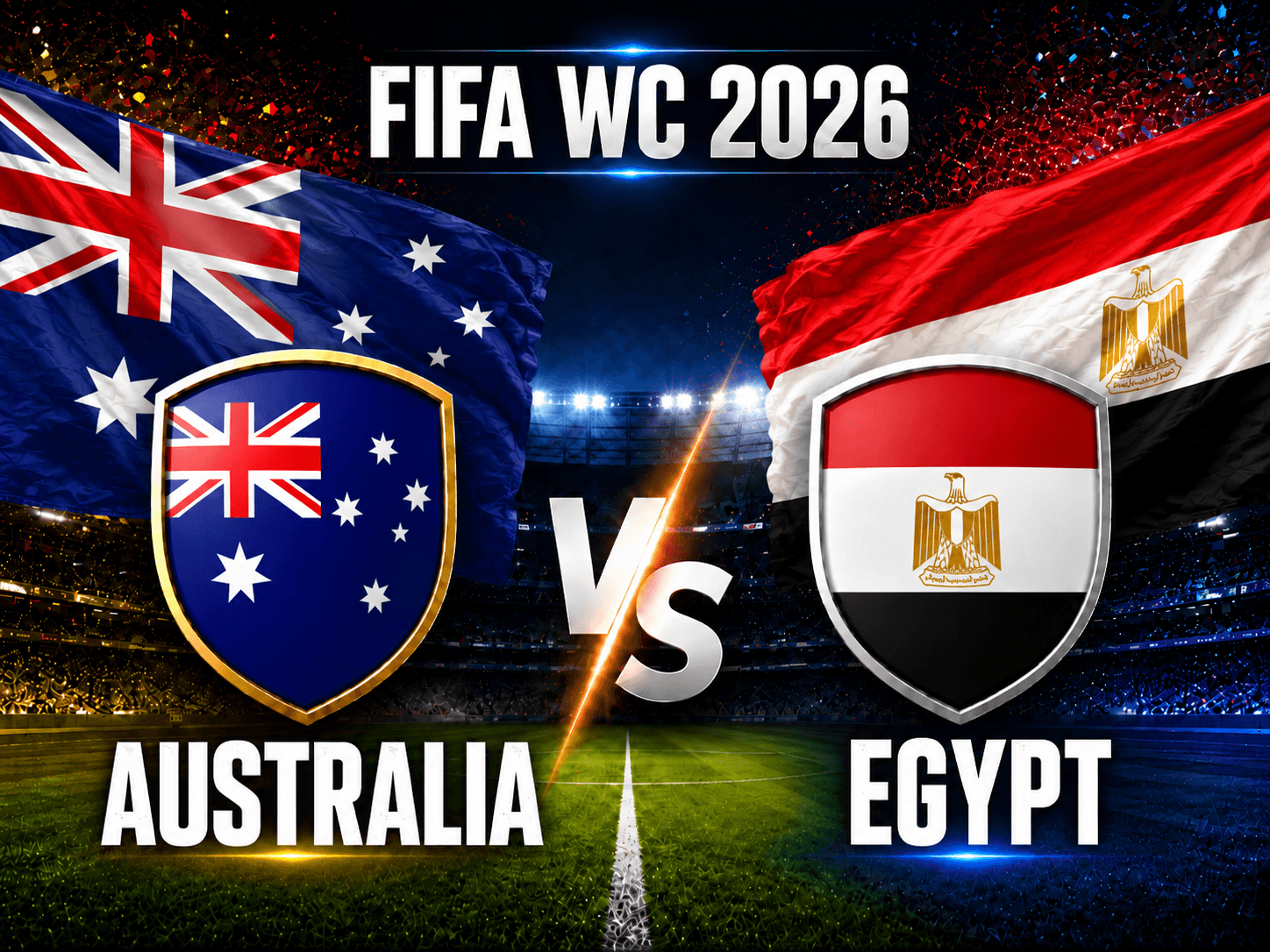
Main weapon of Australia
Australia’s best route is clear to me. Tony Popovic has built a compact back-three structure that accepts suffering, protects the box and waits for transition moments. The strongest zones are the flanks, where Jordan Bos and Nestory Irankunda can attack space quickly, with early service aimed toward mobile runners and support from Connor Metcalfe. This is not a team that overwhelms opponents with volume. Australia have scored only twice in the tournament and average just 0.7 xG per game, so their attack works only if the match stays tight and physical.
Set pieces are therefore crucial. With Souttar, Circati and Herrington, Australia carry real aerial weight. The 0-0 against Paraguay and the earlier 2-0 over Türkiye showed the same pattern, keep shape, limit chaos, then strike in specific moments. For this weapon to work, Egypt must be dragged into a slow game with repeated duels and little space between the lines. Egypt can still neutralize it if they circulate the ball patiently and stop counters at source, especially if Yasser Ibrahim dominates the box.
Main weapon of Egypt
Egypt have the more rounded attacking model. They average 1.4 xG, 15.7 shots and 61 percent possession, so their danger is built through territorial control, wide attacks and runners arriving from midfield. Salah is the reference point when fit, but what I like about this Egypt side is that they are not reduced to one man. Marmoush, Trezeguet, Mostafa Zico, Emam Ashour and Mahmoud Saber all offer different angles.
The key zone is around the outside of Australia’s back three. If Egypt pin the wing-backs deep, gaps can open beside the central defenders. That is where Marmoush and Salah, if available, can be decisive. The problem is obvious. Salah has a hamstring issue, Fatouh is likely out, and Egypt conceded in all three group matches. Even in the 1-1 with Iran, after taking the lead, they looked vulnerable late on.
Which arguments look more convincing
Australia’s strengths are stable because they do not depend on rhythm or possession. Their defensive block travels well into knockout football. Egypt’s edge is higher, but also more sensitive to personnel and match state. If Egypt score first, I think their superiority in possession becomes much more valuable. If Australia score first, this game could turn into trench warfare.
That is why I respect the draw price at 2.88 and especially the low-total market. Under 2.5 goals at 1.44 fits the profile of both teams. Australia rarely create much, Egypt may be missing sharpness in key attacking areas, and knockout tension usually freezes risk. A draw after 90 minutes looks very live to me.
Prediction for the result and qualification
My main read is that Egypt’s weapon is slightly more likely to work because they simply generate more pressure and more shots than Australia. Still, I do not expect a flowing win. I expect Egypt to have the ball, Australia to defend deep, and the match to swing on one finish or one set piece.
Probable score, Australia 0-1 Egypt. My main betting market is Under 2.5 goals at 1.44. The alternative is Egypt to win in regular time at 2.50, which carries more risk because of the Salah situation. I would put a meaningful chance on extra time because Australia know how to drag a match into a low-event script, but if Egypt have even a managed Salah and the stronger bench in attack, I still lean their way. In a penalty shootout, Australia’s defensive mentality gives them hope, yet Egypt’s greater individual quality keeps them marginally ahead.
My final prediction is Egypt to qualify, most likely after a narrow 90-minute win.